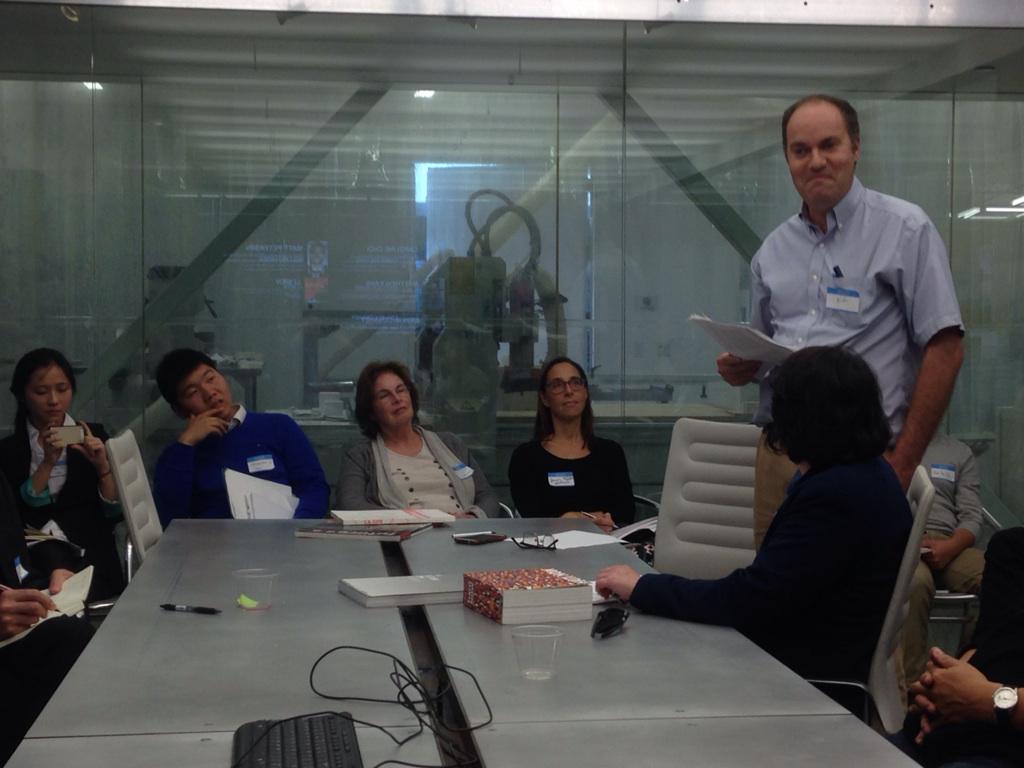
Here is a photo of me talking and you can see that I'm having fun and the audience of roughly 45 people are listening. I stressed four ideas;
1. Competition
2. Big Data
3. Incentives and entrepreneurship
4. Experimentation and humility among government officials.
1. In an open system of cities, Los Angeles competes to attract, retain and grow the skilled. If in 2050, Los Angeles is no longer sexy to the mobile young and educated then its future is bleak.
2. This is the Big Data age, we have an incredible amount of data about urbanites concerning their desires and their activities. Where is the low hanging fruit in making LA a more energy and water efficient city? I talked about my research with Frank Wolak where we implemented a field experiment where we educated households about the increasing block tariff for which they pay for electricity, we find large reductions in electricity consumption among those who were high baseline consumers
3. AB32 will raise energy and water prices and will incentivize more Elon Musks to enter the game of designing and marketing green products. The same induced innovation optimism holds true for products that help us to adapt to climate change.
4. The Mayor's office should acknowledge that it "knows that it does not know" what are good policies for encouraging sustainability. Such humility is a first step to running pilot field experiments to learn about what policies are cost effective. Since ideas are public goods, those policy ideas (such as dynamic pricing for parking in downtowns) that turn out to work can be replicating everywhere.
Thom Mayne is a really impressive guy. He gets economics and that's a rare trait at UCLA.